River Guides
The Chattooga River: A Complete Guide to One of the Southeast’s Most Iconic Wild Rivers
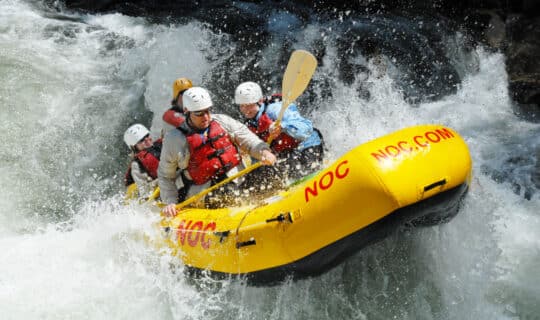
The Chattooga River is a 57-mile river that forms much of the border between Georgia and South Carolina before flowing into Lake Tugaloo. Flowing through the Blue Ridge Mountains and the Chattahoochee and Sumter National Forests, the Chattooga is widely regarded as one of the most beautiful and ecologically significant rivers in the eastern United States.
In 1974, the Chattooga became one of the first rivers protected under the National Wild and Scenic Rivers Act, preserving its free-flowing character, pristine forests, and rugged mountain scenery. Unlike many popular whitewater rivers, there are no dams controlling its flow and few roads alongside the river, creating an authentic wilderness experience that feels remarkably untouched.
Today, the Chattooga attracts visitors from across the country for white water rafting, kayaking, hiking, fishing, camping, and sightseeing. Whether you’re interested in its rich history, diverse wildlife, or legendary rapids, the Chattooga River remains one of the Southeast’s most iconic outdoor destinations.
Chattooga River at a Glance
| Location | Border of Georgia & South Carolina, Western North Carolina |
| Length | 57 miles |
| Guided Rafting Sections | Section 3 & Section 4 |
| Rapid Difficulty | Class II-V |
| Known For | Being one of the South's last free flowing rivers, receiving a Wild & Scenic Rivers Act designation in 1974, and its role in the film Deliverance |
A Brief History of the Chattooga River
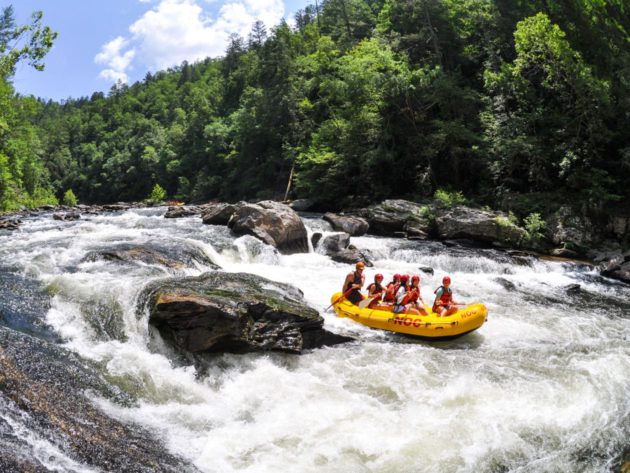
Long before European settlement, the Chattooga River was an important resource for the Cherokee people, who relied on its waters for transportation, fishing, hunting, and daily life. The river’s name is believed to come from a Cherokee word referring to “drawn rock” or “rocky terrain,” a fitting description of its boulder-filled channel.
During the late 1800s and early 1900s, logging operations expanded throughout the Southern Appalachians, and portions of the Chattooga watershed were heavily timbered. Unlike many rivers in the Southeast, however, the Chattooga was never dammed for hydroelectric power. As conservation efforts gained momentum in the mid-20th century, the river became a focal point for preserving one of the region’s last remaining free-flowing mountain rivers.
In 1974, the Chattooga was designated a National Wild & Scenic River, becoming one of the first rivers in the country to receive this distinction. The designation protects approximately 57 miles of the river corridor, preserving its natural character while allowing visitors to enjoy recreational opportunities in an unspoiled setting.
The river gained additional recognition in 1972 when portions of the film Deliverance were filmed along the Chattooga, featuring NOC’s founder Payson Kennedy as a stunt man. The movie introduced millions of people to the river’s dramatic scenery, and today’s visitors can still enjoy a place defined by its natural beauty, world-class recreation, and protected wilderness.
Geography of the Chattooga River
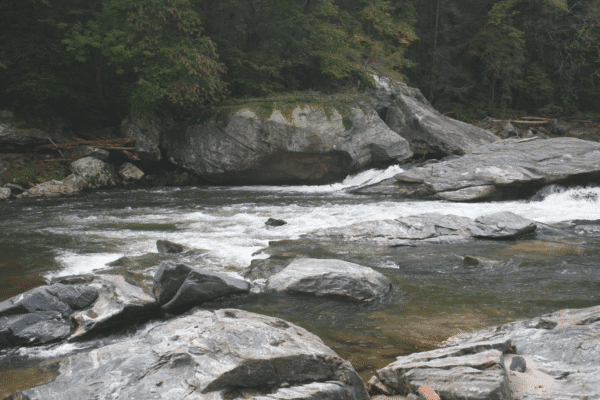
The Chattooga River begins high in the Blue Ridge Mountains of western North Carolina before flowing south to form much of the border between Georgia and South Carolina. Along its journey, the river winds through steep gorges, dense hardwood forests, and remote wilderness before ending at Lake Tugaloo.
Much of the river corridor lies within the Chattahoochee National Forest in Georgia and the Sumter National Forest in South Carolina. Because roads are largely absent along the river, many stretches can only be accessed by hiking trails, helping preserve the remote character that makes the Chattooga unique.
The river’s rocky gradient and natural flow create ideal conditions for whitewater, while its surrounding forests provide habitat for a wide variety of native plants and wildlife.
Whitewater Sections of the Chattooga River
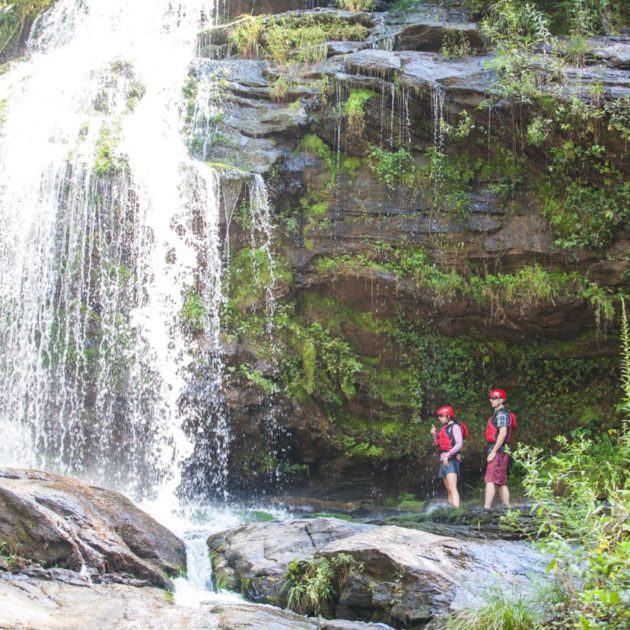
The Chattooga River is traditionally divided into four sections, each offering a unique paddling experience. While private boaters often explore all four sections depending on water levels, commercial rafting only takes place on Sections III and IV. Together, these two stretches showcase everything that makes the Chattooga famous, from scenic Class II and III rapids to technical Class IV whitewater deep within a protected wilderness corridor.
Section III
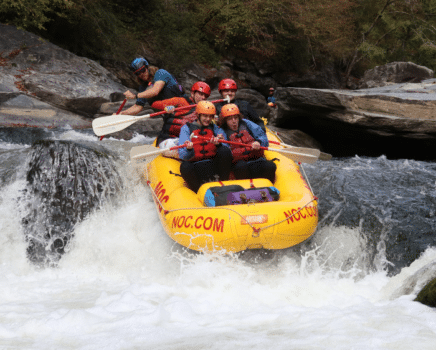
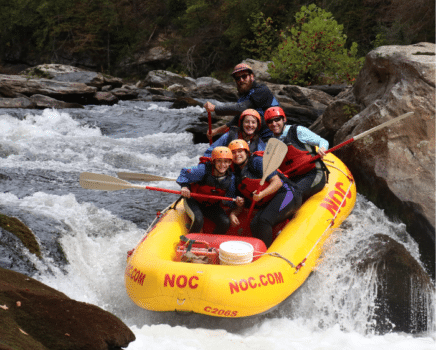
Section III offers an exciting full-day rafting experience that combines beautiful scenery, fun whitewater, and plenty of opportunities to swim and explore the river. This section features a fun mix of Class II and III rapids, including Dick’s Creek Ledge, The Narrows, Eye of the Needle, and Painted Rock, as the river winds through the scenic Chattooga Wild & Scenic River corridor. The trip culminates at the legendary Class IV Bull Sluice, an exciting finale and one of the most iconic rapids in the Southeast.
Section IV
Section IV is home to the Chattooga’s biggest and most technical whitewater, with legendary Class IV and V rapids including Seven Foot Falls, Raven Chute, Crack in the Rock, Jawbone, and Sock ‘Em Dog. This action-packed stretch delivers continuous whitewater through a rugged wilderness canyon, making it one of the premier rafting experiences in the Southeast.
Although Section IV is more challenging than Section III, guests do not need previous rafting experience. NOC’s professionally trained guides provide instruction throughout the trip while navigating each rapid and sharing stories about the river’s history, geology, and ecology.
Best Time to Visit the Chattooga River
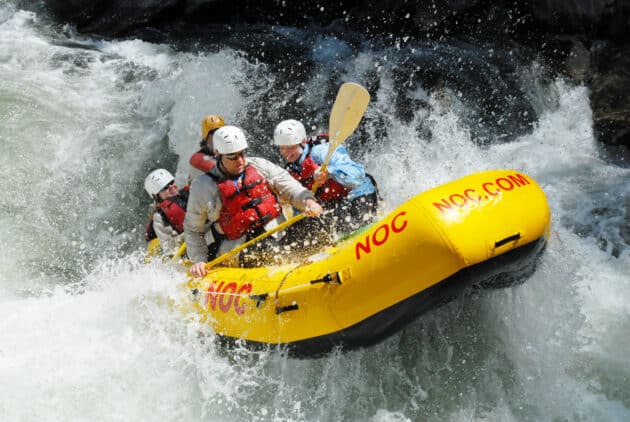
The Chattooga River rafting season typically runs from spring through fall, with water levels varying naturally based on rainfall. Because the Chattooga is free flowing, every trip is slightly different.
Spring often brings higher water levels and vibrant forests bursting with wildflowers. Summer offers warm weather, comfortable swimming conditions, and long days perfect for enjoying the river. In the fall, colorful foliage transforms the surrounding mountains into one of the Southeast’s most spectacular autumn landscapes. No matter when you visit, the Chattooga’s natural flow ensures every trip offers a unique experience.
Wildlife and Ecology of the Chattooga River
The Chattooga River supports one of the most diverse ecosystems in the Southern Appalachians. Its cold, clean water provides habitat for native fish, amphibians, and countless aquatic species, while the surrounding forests shelter an abundance of wildlife. Visitors commonly spot white-tailed deer, wild turkey, river otters, and black bears throughout the watershed. Birdwatchers may see belted kingfishers, great blue herons, osprey, and even bald eagles soaring above the river corridor.
The forests surrounding the Chattooga are filled with towering hardwoods, mountain laurel, rhododendron, and colorful wildflowers that bloom throughout the spring and summer. Because much of the river is protected as part of the National Wild & Scenic Rivers System, visitors are encouraged to follow Leave No Trace principles by packing out everything they bring, staying on designated trails, and respecting wildlife from a safe distance.
Experience the Chattooga River with NOC
From its Cherokee heritage and Wild & Scenic designation to its legendary whitewater and breathtaking wilderness, the Chattooga River offers one of the most memorable outdoor experiences in the Southeast.
- Chattooga Section III: A full-day rafting adventure featuring splashy Class II and III rapids, a delicious riverside lunch, and the famous Bull Sluice rapid. This trip is ideal for families, first-time rafters, and anyone looking to experience the beauty of the Wild & Scenic Chattooga.
- Chattooga Section IV: One of the Southeast’s premier white water rafting adventures, featuring legendary Class IV rapids including Seven Foot Falls, Raven’s Chute, and Five Falls. Perfect for adventurous guests looking for an exhilarating day on one of America’s most iconic rivers.
Planning a longer getaway? Pair your rafting trip with nearby hiking, waterfalls, and mountain towns using our Chattooga itinerary and trip planning resources. If you have questions or need help choosing the right trip, our reservation team is happy to help at 800-232-7238.
Chattooga River Rafting Trips
Frequently Asked Questions About the Chattooga River
Why is the Chattooga River famous?
Where is the Chattooga River?
What is the difference between Chattooga Section III and Section IV?
Can beginners raft the Chattooga River?
Is the Chattooga River dam controlled?
Can you swim in the Chattooga River?
Which Chattooga River rafting trip should I choose?