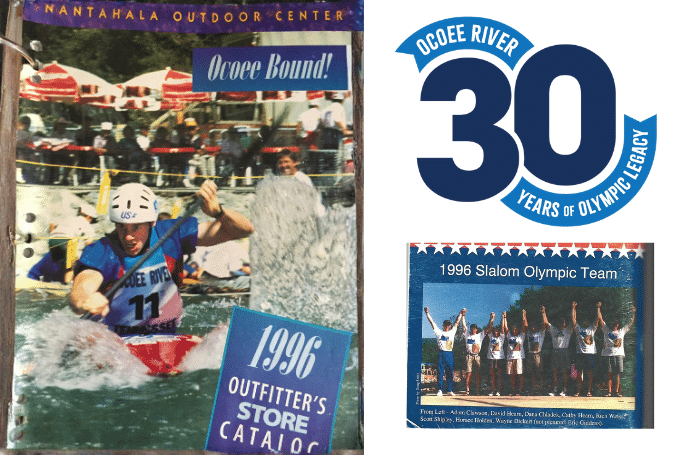
30 Years After the Olympics, the Ocoee River Still Runs Legendary
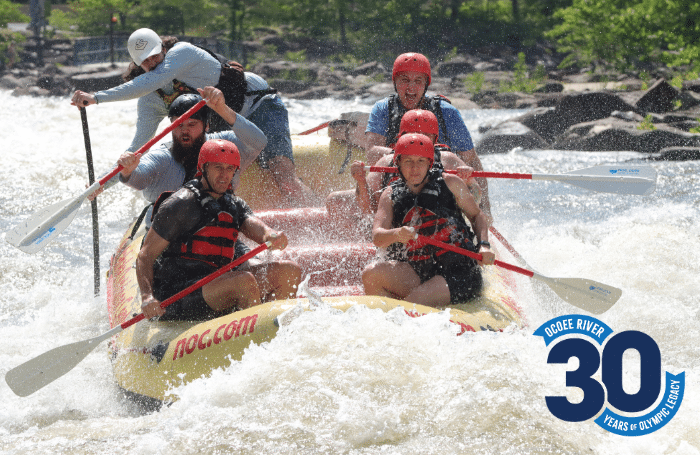
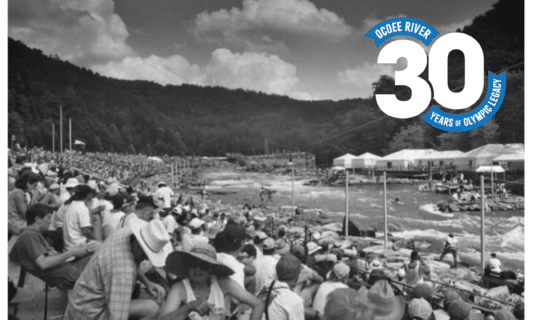
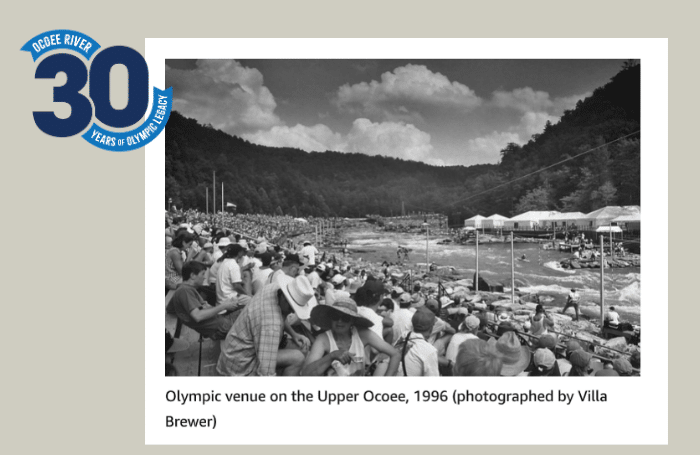
Thirty years ago, the world’s best paddlers gathered on a stretch of river in southeast Tennessee. Cameras lined up the banks and gates hung over roaring whitewater. For the first time in Olympic history, canoe and kayak slalom would be raced on a real whitewater river. That river was the Ocoee. The Olympic spotlight lasted one summer in 1996, but the story of this river started long before and continues today. Today, families, friends, and first-time rafters still paddle the same current that once carried Olympians. No medals required – just a paddle, a raft, and a willingness to rise to the moment.
Why the Ocoee Was Chosen for the Olympics
Before 1996, every Olympic whitewater slalom course had been fully man-made, created from concrete and steel. The Ocoee changed that forever. Olympic organizers were drawn to what paddlers already knew:
- A powerful, technical river with Class III–IV rapids
- A narrow gorge that created a natural flow and a challenge
- Reliable water access made possible through scheduled releases
- Proximity to Atlanta, the host city of the 1996 Games
But one standout attribute was a river shaped by mountains, not machines. While select features were reinforced and flow was constricted in places to meet Olympic standards, the riverbed itself remained natural, making the Ocoee river the first and only river ever used for Olympic whitewater competition. For regional paddlers, it wasn’t just historic; it was home.
Before the Spotlight: Fighting for the River
Before it was chosen for the Olympics, the Ocoee’s future depended on people who believed it should run. Originally dammed in 1911, with three dams in place by 1939, much of the river’s flow was controlled. That changed in the late 1970s when a section reopened during flume work and water returned to the riverbed. Paddlers showed up quickly.
By the early 1980s, outfitters and river advocates were working to secure regular water releases. Members of the NOC community were part of that effort. In 1984, Congress approved funding to support scheduled releases through TVA. That decision shaped everything that followed.
NOC and the Olympic Connection
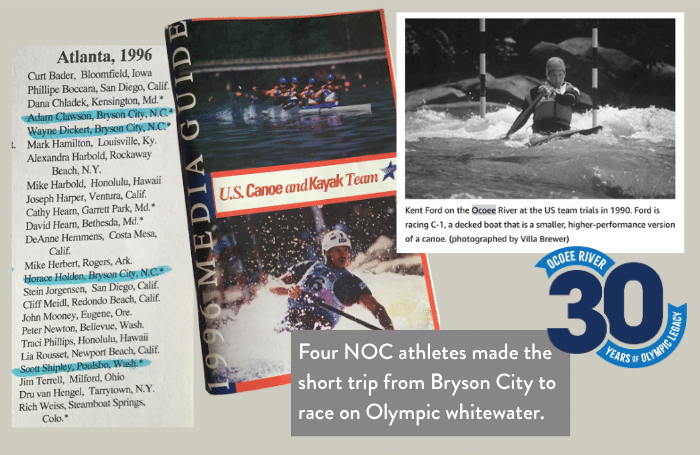
By the time the Summer Olympics arrived at the Ocoee River, NOC was already into competitive whitewater. Four Nantahala Racing Club paddlers earned spots on the 1996 U.S. Olympic team:
- Adam Clawson
- Scott Shipley
- Wayne Dickert
- Horace Holden Jr.
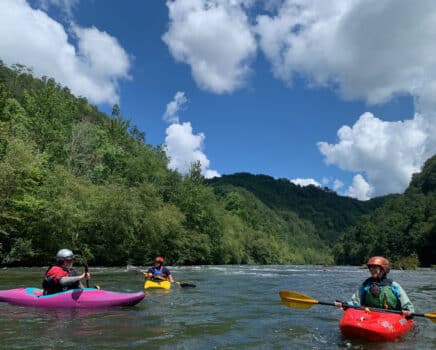
They trained on Southeastern rivers, including the Nantahala and Ocoee, supported by a culture that valued precision, progression, and respect for moving water. But just as important as who raced were the many guides, instructors, and paddlers who never stood on a podium, yet helped build the skill, access, and river stewardship that made Olympic whitewater possible in the first place. That legacy still lives on, not as a trophy on a shelf, but as a mindset carried downstream every day.
The Ocoee River Today
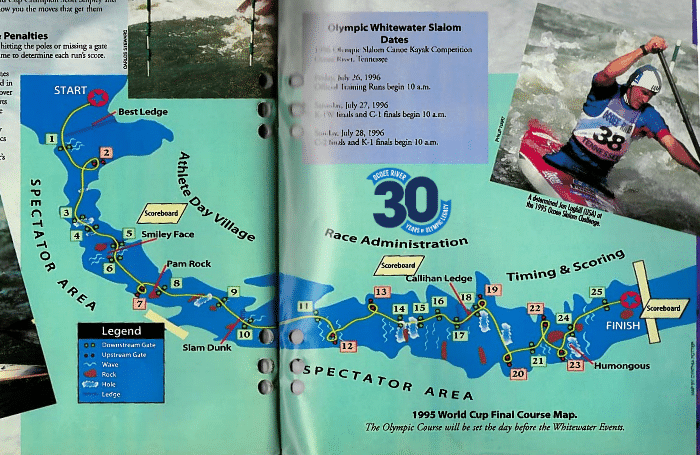
The Olympic course hosted athletes in the Slalom Canoe Kayak Competition. The gates came down after 1996. The teams returned to their countries and the world moved on to the next game. The passion for whitewater on the Ocoee River in Tennessee has remained. Today’s Upper Ocoee trip still runs with the same powerful rapids like Humongous and Slam Dunk, with the same pull, finishing just the same… with a smile after the run.
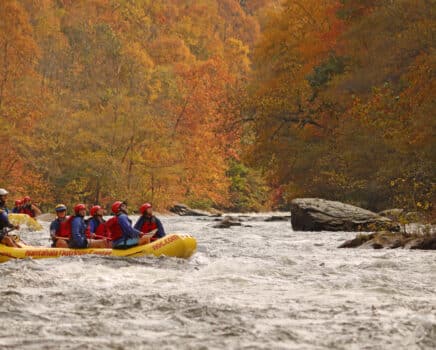
On the Ocoee this year, instead of the world’s best athletes racing the clock, you’ll find families paddling together for the first time, crashing through the same rapids and guide stories with Olympic connections. It’s the same river, just different finish lines.