Where the Olympic River Runs:
NOC and the Story of the Ocoee
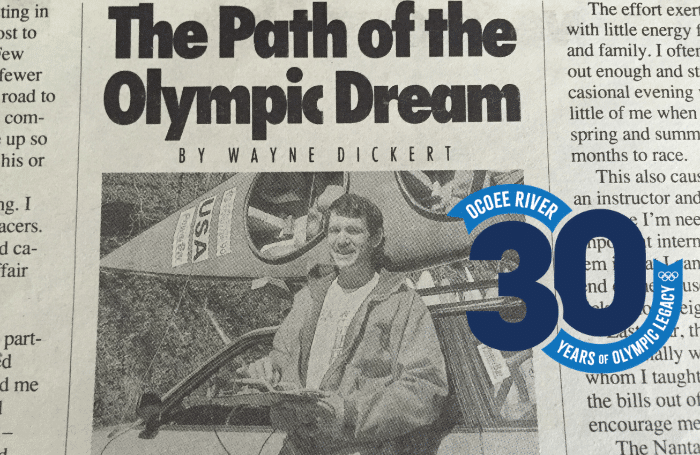
The first thing Wayne Dickert, Executive Director at Nantahala Racing Club, remembers about qualifying for the Olympic team didn’t happen in front of flashy cameras and Olympic-sized crowds. It happened quietly at the bottom of a run. After months of training and years of paddling rivers across the Southeast, Dickert and his partner Horace Holden pulled their canoe into the eddy below the finish of the team trials. They had just put together the best run of their careers. “We gave it everything,” Dickert remembers. “It was one of those flow-state runs where everything clicks.” For a moment, they just sat there in the current, catching their breath and letting it sink in. “We pulled over at the bottom and paused together,” he says. “Just realizing what we had accomplished. That’s a moment very few athletes ever get to experience.” That moment helped send Dickert to the 1996 Olympic Games, where the whitewater slalom events would take place on a river many paddlers in the Southeast already knew well. The Ocoee River.
Whitewater was here before the Olympics
Long before Olympic gates hung over the water, the Ocoee river had already begun drawing paddlers. The turning point came on Labor Day weekend in 1976, when an old flume on the river was shut down and water began flowing regularly through the natural riverbed again. Suddenly, a stretch of whitewater that had been largely dormant was running free and paddlers took notice. They began running the river regularly, and by the following summer a handful of companies were offering guided whitewater rafting trips through the gorge. NOC staring running trips in 1977 on the Ocoee with Dick Eustis as the outpost manager. By the 90’s the Ocoee River had built a reputation as one of the most exciting whitewater rivers in the Southeast. So, when Atlanta was awarded the 1996 Summer Olympics, organizers began searching for a whitewater venue capable of hosting the world’s best canoe and kayak athletes. The Ocoee took the gold.
Unlike many Olympic whitewater venues built entirely from concrete, the Ocoee offered something different, a powerful natural river running through a steep mountain gorge. Engineers worked with paddlers to shape the Upper Ocoee into an Olympic slalom course, adding features while preserving the river’s natural character. When the world’s best paddlers arrived in Tennessee, they found a course that demanded precision, strength, and creativity.
The Challenge of Humongous
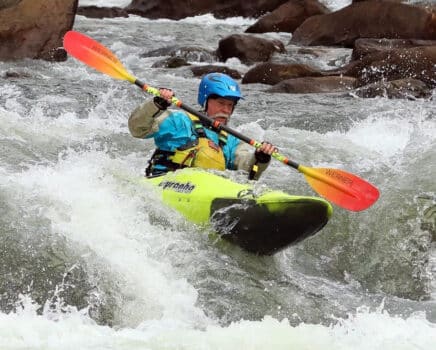
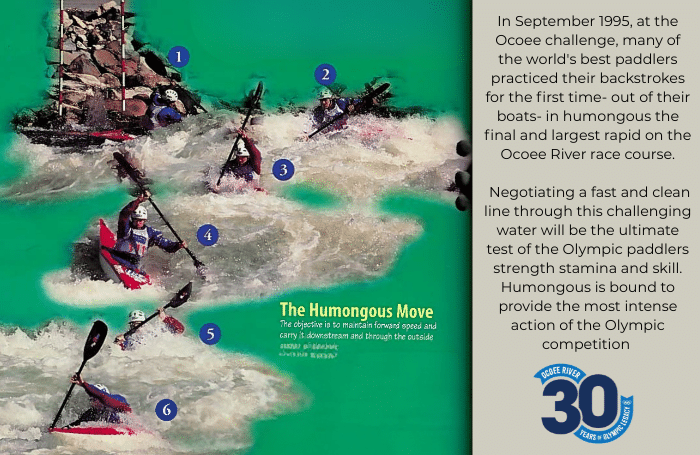
One rapid in particular stood out near the end of the Olympic course, Humongous, the largest rapid on the Ocoee’s racecourse and one of the most memorable sections of the river. During the 1995 Ocoee Challenge, a pre-Olympic event that drew many of the world’s top paddlers, athletes practiced backstrokes there for the first time, sometimes finding themselves out of their boats in the churning water. The rapid became known as the ultimate test of the course. Negotiating a fast, clean line through Humongous demanded everything Olympic slalom athletes train for: strength, stamina, timing, and technical skill. The move became so iconic that NRC paddler Scott Shipley famously demonstrated what many called “The Humongous Move,” a line that showcased the power and precision required to run the rapid cleanly. For spectators, it was one of the most intense moments of the Olympic competition. For paddlers, it was simply the Ocoee offering some of the best whitewater it’s known for.
A River That Shapes Paddlers
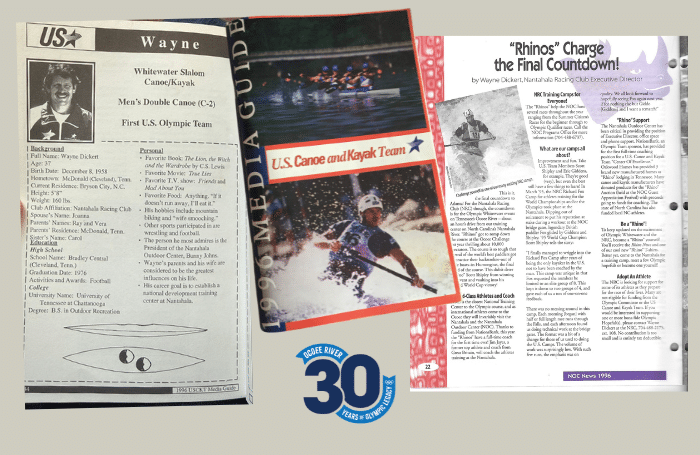
For Wayne Dickert, the 1996 Summer Olympics were just one chapter in a long relationship with the river and the sport. Eastern Tennessee local and long time NRC athlete, Dickert had already built an impressive whitewater career before the Games, serving as a member of the U.S. Canoe and Kayak Team and a 1992 Olympic alternate in C-2. But the Olympic experience opened new doors. Looking back thirty years later, what stands out most to him isn’t just the competition, it’s the community surrounding it. “Whitewater paddling at the Olympics is really just one big family,” he says. “Everyone there has worked so hard to get to that moment, and everyone is thrilled just to be part of it.” That sense of shared passion carried forward long after the Olympic closing ceremony. Dickert would go on to serve as the National Slalom Development Director, helping build youth paddling programs across the country and developing progression pathways for the next generation of whitewater athletes and continuing with the Nantahala Racing Club in Bryson City. “It was the opportunity of a lifetime,” he says. And for Dickert, the Ocoee has remained a meaningful place long after the Olympic gates came down. In fact, it’s where he chose to get married.
Raft the Ocoee River Olympic Course
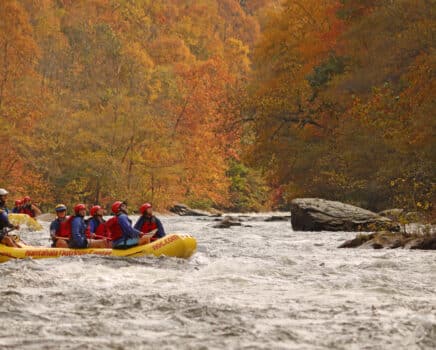
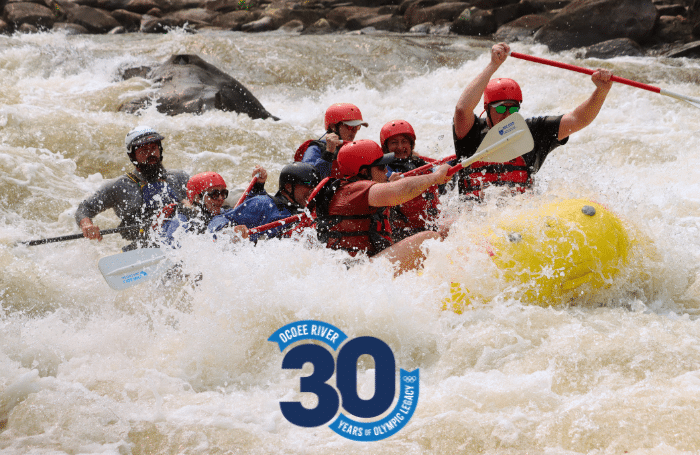
Three decades after the Olympic Games, the Ocoee continues to do what it has always done, to bring people together on moving water. The rapids that challenged Olympic athletes now welcome thousands of white water rafting guests every year. Guides help crews navigate the same powerful features that once decided on Olympic medals. The stakes may be different today. Instead of racing the clock, most people are simply learning how to paddle together, lean into waves, and enjoy the ride. Today, when a raft pushes into the waves of the Ocoee, it’s not just another guided trip; it’s a chance to experience a run on historical whitewater.