River Guides
The French Broad River: A Complete Guide to White Water Rafting, History & Outdoor Adventures

The French Broad River is one of the oldest rivers in the world, flowing more than 200 miles through the Blue Ridge Mountains of North Carolina and Tennessee. Beginning near Rosman, North Carolina, the river winds through Pisgah National Forest, the city of Asheville, and the scenic mountains of western North Carolina before joining the Holston River in Tennessee. Along the way, it passes through vibrant mountain communities, ancient forests, and some of the most beautiful landscapes in the Southeast.
Today, the French Broad River is one of North Carolina’s premier outdoor recreation destinations. Visitors come to enjoy white water rafting, kayaking, fishing, tubing, hiking, and paddling while taking in breathtaking mountain scenery. Located just 30 minutes from downtown Asheville, the French Broad is also home to one of the region’s most popular white water rafting trips, offering warm water, exciting rapids, and gorgeous views of Pisgah National Forest.
Whether you’re interested in French Broad River rafting, planning an Asheville vacation, or learning about one of North America’s oldest rivers, this guide covers everything you need to know before your visit.
French Broad River at a Glance
| Location | Western North Carolina and Eastern Tennessee |
| Length | 218 miles |
| NOC Guided Rafting Sections | Section 9 near Marshall and Hot Springs |
| Rapid Difficulty | Mostly class II-III with a class IV finale |
| Known For | Family friendly white water and scenic mountain views |
A Brief History of the French Broad River
The French Broad River has shaped western North Carolina for millions of years. Long before European settlers arrived, the Cherokee people lived throughout the river valley and relied on the river for transportation, fishing, agriculture, and trade. They called the river Tahkeeosteh, often translated as “Racing Waters,” a fitting name for a river known for its swift current.
The river received its modern name during the colonial era. French explorers and traders operated west of the Appalachian Mountains, while English settlements developed farther east. To distinguish it from the English Broad River in present-day South Carolina, early settlers began referring to it as the “French Broad.”
Geologists widely consider the French Broad River to be one of the oldest rivers in North America and among the oldest rivers in the world. Unlike many rivers that changed course during the formation of the Appalachian Mountains, the French Broad maintained much of its original path, carving through the mountains as they slowly rose around it.
Throughout the 19th and early 20th centuries, the river played an important role in the region’s logging, transportation, and industrial development. More recently, decades of conservation efforts have helped improve water quality and restore the river into one of western North Carolina’s most treasured recreational resources. Today, the French Broad River welcomes thousands of visitors each year who come to experience everything from scenic paddling trips to exciting white water rafting adventures.
Geography of the French Broad River
The French Broad River begins near Rosman, North Carolina, in the Blue Ridge Mountains before flowing north through Transylvania, Henderson, Buncombe, and Madison counties. It passes directly through downtown Asheville before continuing into eastern Tennessee, where it eventually joins the Holston River to form the Tennessee River.
One of the river’s most unique characteristics is that it flows north, making it one of the relatively few rivers in the United States with a northward course.
Along its journey, the French Broad flows through Pisgah National Forest, fertile mountain valleys, and vibrant river communities. The river drains more than 5,000 square miles and supports an incredibly diverse ecosystem while providing countless opportunities for recreation throughout western North Carolina.

Rapids on the French Broad River
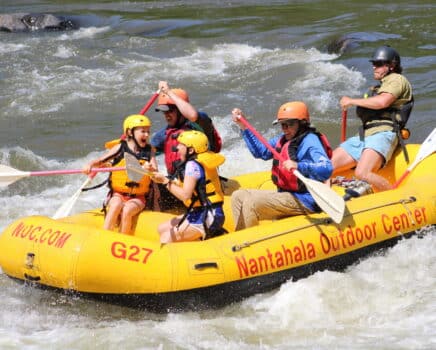
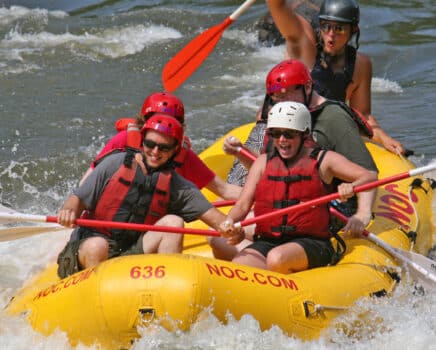
For visitors looking for white water rafting near Asheville, NC, the French Broad River offers one of the best rafting experiences in North Carolina. Section 9 of the French Broad combines warm water, scenic mountain views, and exciting Class II, III, and IV rapids, making it an excellent destination for families, first-time rafters, and experienced paddlers alike.
Section 9 delivers frequent waves and splashy rapids balanced by calm pools where paddlers can enjoy the scenery, spot wildlife, and learn about the river’s history. Some of the most notable rapids include:
Big Pillow: One of the first major rapids on the section, Big Pillow challenges guides to navigate around a massive boulder that creates large waves and exciting splashes. It’s an unforgettable introduction to the French Broad’s playful whitewater.
S-Turn: As its name suggests, S-Turn winds through a series of quick bends that require precise maneuvering. This fun Class III rapid keeps paddlers engaged while offering plenty of opportunities to get soaked.
The Ledges: One of the river’s signature rapids, The Ledges features powerful waves, rocky channels, and exciting drops that make it a favorite among both guides and guests.
Kayaker’s Ledge: This technical rapid requires careful navigation through narrow channels and creates exciting wave trains that showcase the French Broad’s unique character.
Frank Bell’s Rapid: Located near the end of Section 9, Frank Bell’s is the river’s only commercial Class IV rapid. This exciting finale features larger waves, a steeper gradient, and one last burst of adrenaline before the river begins to calm.
Rapids change depending on water levels. Whether you’re experiencing the French Broad for the first time or returning for another adventure, Section 9 offers an outstanding mix of scenic beauty, fun whitewater, and memorable rapids that make it one of the best places for white water rafting in North Carolina.
Best Time to Visit the French Broad River
The French Broad River is a fantastic destination throughout the rafting season, which typically runs from spring through fall.
Spring brings lush forests, blooming wildflowers, and exciting water levels following seasonal rainfall. Summer is the most popular time to visit, with warm weather, comfortable water temperatures, and long days perfect for rafting, kayaking, and swimming. During the fall, vibrant autumn foliage transforms the river corridor into one of western North Carolina’s most spectacular scenic drives and paddling destinations.
Because the French Broad is free flowing, water levels naturally vary with rainfall, making every trip slightly different while still providing an exciting experience throughout the season.
Wildlife and Ecology of the French Broad River
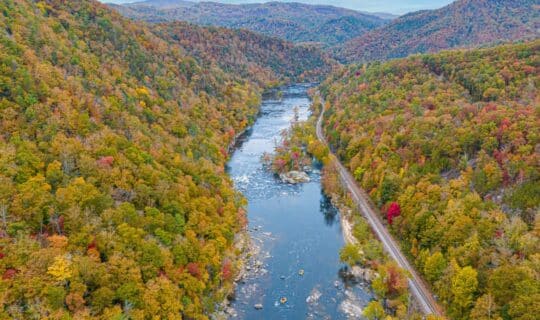
The French Broad River supports an incredible variety of wildlife and native plants throughout its watershed. The river and surrounding forests provide habitat for river otters, white-tailed deer, black bears, wild turkey, turtles, and countless species of fish and amphibians. Birdwatchers often report sighting blue herons, belted kingfishers, osprey, and bald eagles along the corridor, which also supports towering hardwoods, rhododendron, mountain laurel, and colorful wildflowers that bloom from spring through summer.
The French Broad River has become a remarkable conservation success story. Decades of restoration efforts have significantly improved water quality, creating a healthier ecosystem for both wildlife and recreation. Visitors can help protect this important resource by following Leave No Trace principles, packing out trash, respecting wildlife, and staying on designated access points.
Things to Do Near the French Broad River
While French Broad River rafting is one of the area’s most popular attractions, there’s plenty more to explore nearby.
Downtown Asheville offers award-winning restaurants, breweries, live music, local shopping, and the vibrant River Arts District. Closer to the NOC French Broad Outpost, the small mountain towns of Marshall and Hot Springs feature charming downtown areas with local shops and galleries.
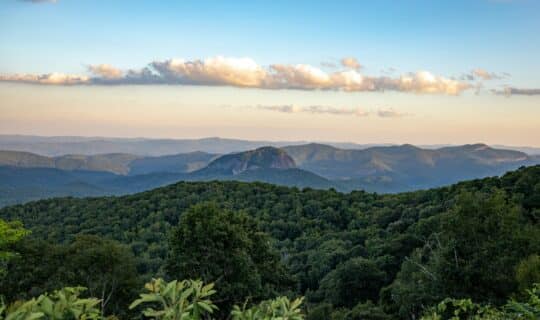
Beyond the city, Pisgah National Forest features hundreds of miles of hiking and mountain biking trails, breathtaking waterfalls, and scenic overlooks along the Blue Ridge Parkway. Include time in your schedule to explore Looking Glass Falls, Sliding Rock, Mount Pisgah, the Cradle of Forestry, and opportunities for fly fishing, kayaking, mountain biking, rock climbing, and wildlife viewing.
Many visitors choose to combine a rafting trip with several days exploring the mountains, making the French Broad one of the best outdoor adventure destinations in North Carolina.
Experience the French Broad River with NOC
From its ancient history and scenic mountain landscapes to its exciting rapids and abundant wildlife, the French Broad River offers one of the best outdoor adventures in western North Carolina. At Nantahala Outdoor Center, we offer three unforgettable ways to experience this incredible river.
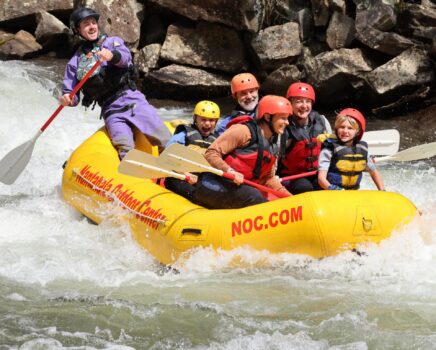
Half-Day French Broad Rafting: Paddle five miles of splashy Class II and III rapids through Pisgah National Forest. Perfect for families, first-time rafters, and visitors looking for an exciting half-day adventure near Asheville. The trip lasts approximately three to four hours, making it easy to enjoy white water rafting and still have plenty of time to explore hiking trails, the Blue Ridge Parkway, or nearby towns like Hot Springs and Marshall afterward.
Half-Day Deluxe French Broad Rafting: The Half-Day Deluxe trip follows the same exciting five-mile rafting route but includes a delicious riverside lunch. It’s a great option for families and groups who want to slow down, enjoy the scenery, and spend a little more time along one of North Carolina’s most beautiful rivers.
Full-Day French Broad Rafting: Guests looking for the most complete French Broad adventure can choose the full-day trip. This eight-mile journey includes all of the exciting rapids found on the half-day trip before continuing downstream to the river’s thrilling Class IV finale, Frank Bell’s Rapid.
Combined with a riverside lunch and even more time to enjoy the scenery, the full-day trip offers one of the best white water rafting experiences in western North Carolina.
Planning a mountain getaway? Follow our Asheville, NC & French Broad River Itinerary to pair your rafting trip with nearby waterfalls, hiking, breweries, and Asheville attractions for an unforgettable western North Carolina vacation. If you have questions or need help choosing the right rafting trip, our reservation team is happy to help at 800-232-7238.
Rafting Trips on the French Broad River
Frequently Asked Questions About the French Broad River
Why is the French Broad River famous?
Where is the French Broad River?
Is the French Broad River really one of the oldest rivers in the world?
Is French Broad River rafting good for beginners?
NOC welcomes guests as young as 8 years old.