
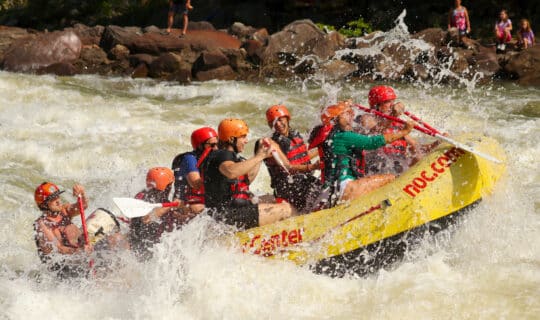
The Ocoee River is a 93-mile river in southeastern Tennessee that flows through the Cherokee National Forest before joining the Hiwassee River. Known for its dam-controlled whitewater and scenic mountain setting, the Ocoee is one of the most popular whitewater rafting rivers in the United States.
The river features two primary rafting sections: the Middle Ocoee and the Upper Ocoee. Together, they offer nearly 10 miles of continuous Class III and IV rapids, attracting everyone from first-time rafters to experienced paddlers. The Upper Ocoee gained international recognition when it hosted the canoe slalom events during the 1996 Atlanta Olympic Games, making it the only natural river in the United States to serve as an Olympic whitewater venue.
Long before it became a rafting destination, the Ocoee River was an important resource for Cherokee communities. In the early 20th century, three hydroelectric dams were built along the river to generate electricity for the growing Southeast. Today, scheduled releases from those dams create the reliable water flows that make whitewater rafting on the Ocoee possible.
Whether you’re interested in its history, Olympic legacy, or thrilling rapids, the Ocoee River remains one of Tennessee’s most iconic outdoor destinations.
Ocoee River at a Glance
| Location | Southeastern Tennessee |
| Length | 93 miles |
| Rafting Sections | Upper Ocoee & Middle Ocoee |
| Rapid Difficulty | Class III-IV |
| Known For | Whitewater rafting, kayaking, hydroelectric dams, 1996 Summer Olympics venue |
A Brief History of the Ocoee River
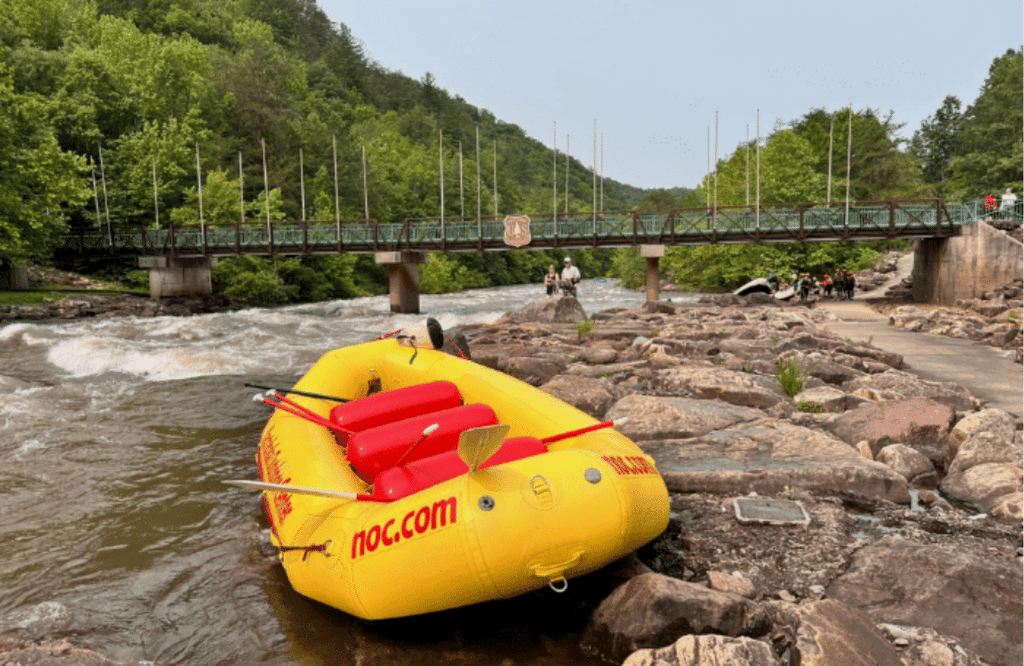
Long before it became a world-famous whitewater destination, the Ocoee River was an important resource for the Cherokee people, who lived throughout the Southern Appalachians for centuries. The river provided water, food, transportation, and fertile land. The river’s name derives from the Cherokee word uwagohi, which refers to the native passionflower that grows throughout the region.
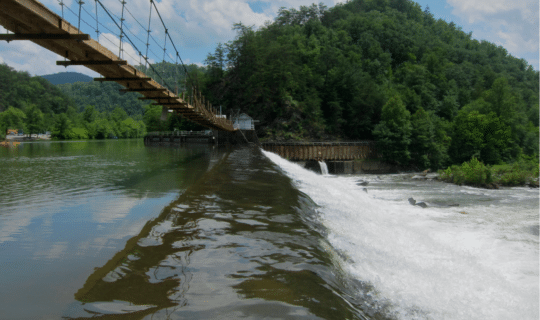
The Ocoee entered a new era in the early 1900s as its steep gradient and powerful flow made it ideal for hydroelectric generation. Between 1911 and 1943, three dams were constructed along the river, helping supply electricity to growing communities and industries across the Southeast. Today, those same dams regulate scheduled water releases, creating the consistent flows that make the Ocoee one of the country’s most reliable whitewater rafting rivers.
The river gained international recognition in 1996 when the Upper Ocoee hosted the canoe slalom events for the Atlanta Olympic Games. The Upper Ocoee was transformed into a world-class competition venue, becoming the only natural river ever used for Olympic slalom competition. Rafters can still run many of the same features that challenged the world’s best paddlers. For more information on the Ocoee Olympic course, visit our post detailing its history.
Today, the Ocoee River is known not only for its rich history but also as one of the most popular whitewater rafting rivers in the United States, welcoming thousands of visitors each year.
Geography of the Ocoee River
The Ocoee River begins in the Blue Ridge Mountains of northern Georgia, where it is known as the Toccoa River. After crossing into Tennessee, it becomes the Ocoee River and flows approximately 93 miles through the Cherokee National Forest before joining the Hiwassee River.
One of the river’s defining features is the Ocoee Gorge, a steep, rocky canyon carved through the Appalachian Mountains. Combined with the river’s significant elevation drop and dam-controlled flows, this rugged landscape creates the ideal conditions for world-class whitewater rafting.
Whitewater Sections of the Ocoee River
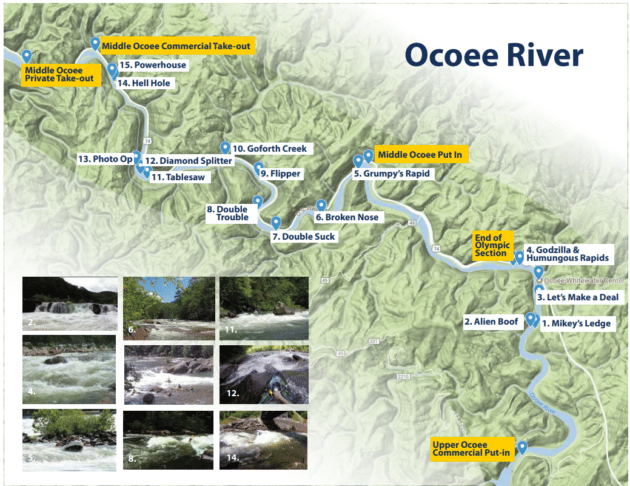
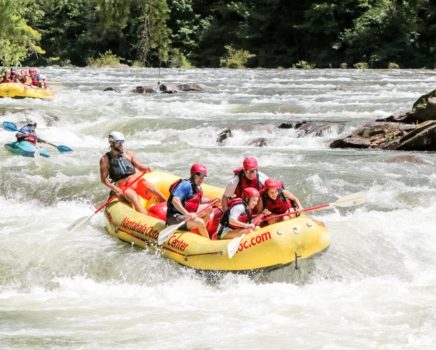
The Ocoee River is divided into two primary rafting sections: the Middle Ocoee and the Upper Ocoee. Each offers a distinct experience, and many visitors choose to raft both in a single day. Together, they create nearly 10 miles of continuous Class III and IV rapids, making the Ocoee one of the country’s most popular rafting destinations.
Upper Ocoee
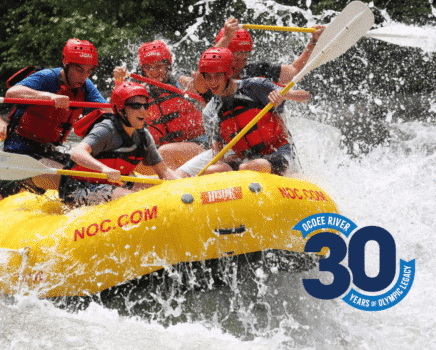
The Upper Ocoee is home to the 1996 Olympic whitewater course and is known for its larger drops and more technical rapids. Along the way, rafters navigate favorites like Blue Hole, Smiley Face, and Slam Dunk, the Olympic course’s signature rapid. This five-mile section is ideal for adventure seekers looking for a fast-paced, action-filled trip.
Middle Ocoee
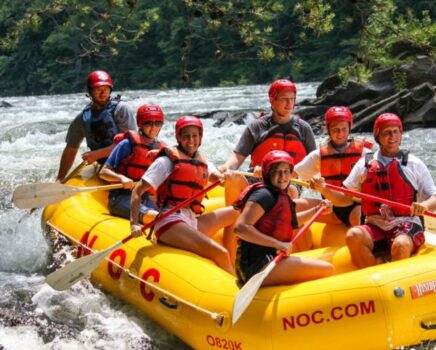
The five-mile Middle Ocoee is the river’s most popular rafting section, offering nearly continuous whitewater from put-in to takeout. The trip features legendary rapids such as Grumpy’s, Broken Nose, Table Saw, Diamond Splitter, Hell’s Hole, and Powerhouse Ledge. Together, these iconic rapids have helped make the Ocoee one of the most recognizable whitewater rivers in the United States.
For a comprehensive look into the rapids on the Middle Ocoee, check out our Ocoee River Rapids Guide!
Best Time to Visit the Ocoee River
The Ocoee River rafting season typically runs from March through October, with scheduled dam releases providing reliable whitewater throughout the season. Summer is the busiest time to visit, offering warm weather, comfortable water temperatures, and consistent rafting conditions. Spring brings cooler temperatures and lush mountain scenery, while fall offers crisp weather and vibrant foliage in the Cherokee National Forest.
No matter when you visit during the rafting season, the Ocoee’s scheduled water releases create dependable conditions that make it one of the most reliable whitewater destinations in the Southeast.
Wildlife and Ecology of the Ocoee River
The Ocoee River flows through the Cherokee National Forest, home to a diverse array of wildlife and native plants. Visitors may spot white-tailed deer, wild turkey, river otters, and even black bears in the surrounding forests. Birdwatchers can often see great blue herons, belted kingfishers, and bald eagles soaring above the river corridor.
The river also supports a healthy population of fish, including smallmouth bass, rainbow trout, and brown trout, while the surrounding forest comes alive each spring with native wildflowers, rhododendron, and mountain laurel.
Much of the Ocoee River corridor is protected within the Cherokee National Forest and managed in partnership with the U.S. Forest Service and the Tennessee Valley Authority (TVA). As you explore the Ocoee, help protect this remarkable ecosystem by following Leave No Trace principles. Pack out everything you bring, stay on designated trails and river access points, and respect wildlife by observing animals from a distance. By recreating responsibly, we can help preserve the Ocoee River for future generations.

Experience the Ocoee River with NOC
From its Cherokee roots and hydroelectric legacy to its Olympic history and world-famous rapids, the Ocoee River has earned its place as one of the country’s most iconic whitewater destinations. Whether you’re drawn by the scenery, the history, or the thrill of the rapids, there’s no better way to experience the river than from the seat of a raft.
At Nantahala Outdoor Center, we offer three ways to explore the Ocoee:
- Middle Ocoee: A half-day adventure featuring five miles of nearly continuous Class III+ rapids—perfect for first-time rafters, families, and groups.
- Upper & Middle Ocoee Combo: Our most comprehensive trip, combining the Olympic whitewater course with the legendary Middle Ocoee for nearly 10 miles of unforgettable rafting.
- Middle Ocoee High Adventure: A more active, guide-led experience that lets guests surf waves, catch eddies, and take a hands-on approach to navigating the river.
Planning a longer getaway? Pair your rafting trip with nearby hiking, waterfalls, and Chattanooga attractions using our 3-Day Chattanooga and Ocoee River Adventure Itinerary. If you have questions or need help choosing the right trip, our reservation team is happy to help at 800-232-7238.
Ocoee River Rafting Trips
Frequently Asked Questions About the Ocoee River
Where is the Ocoee River?
What class rapids are on the Ocoee River?
Can beginners raft the Ocoee?
How old do you have to be to raft the Ocoee?
How cold is the Ocoee River?
Can you swim in the Ocoee River?
What's the difference between the Upper and Middle Ocoee?